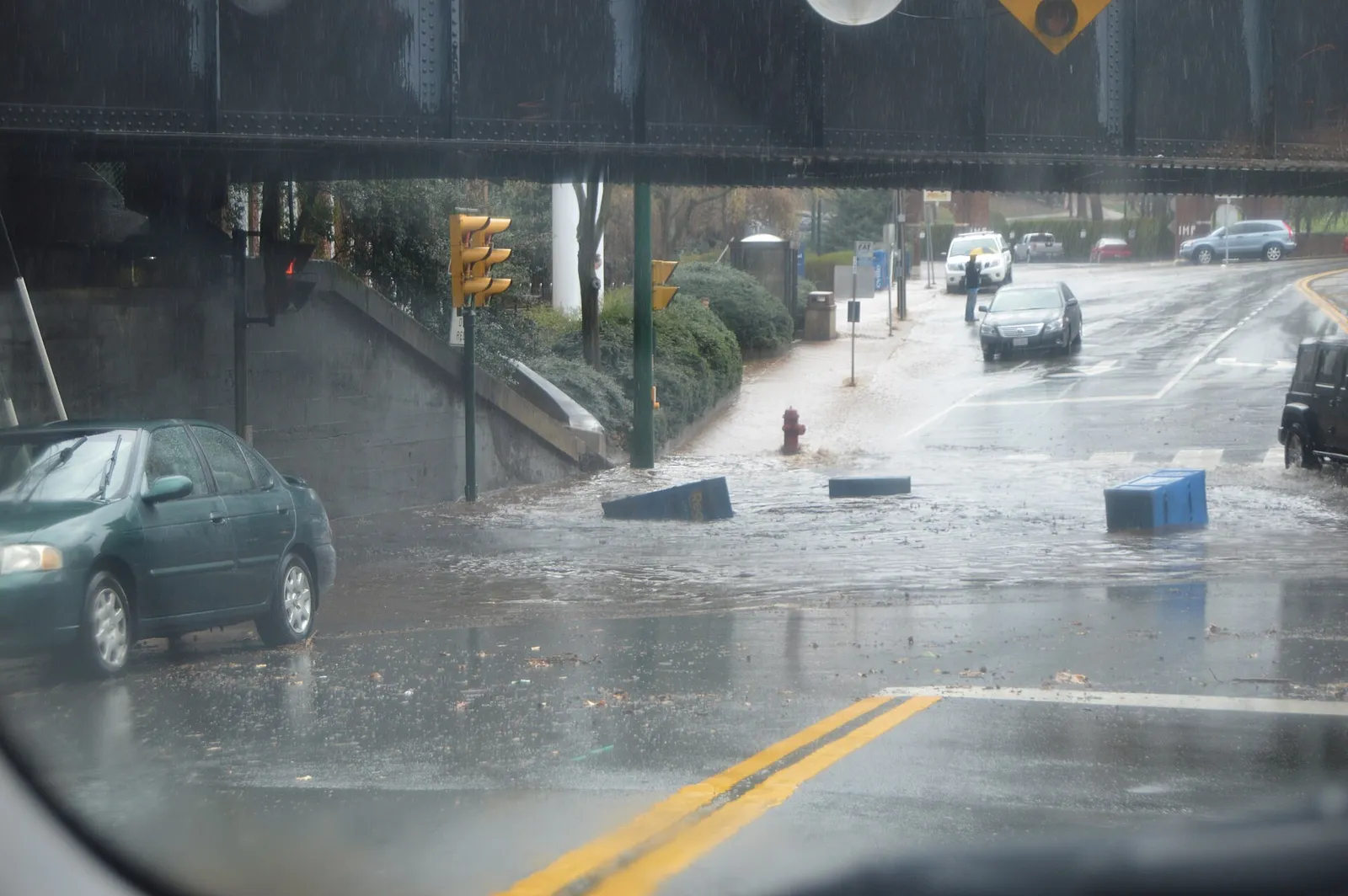
Charlottesville's draft climate resilience plan sets out 16 strategies for heat, flooding, drought and storms. Comments are open through the end of November.
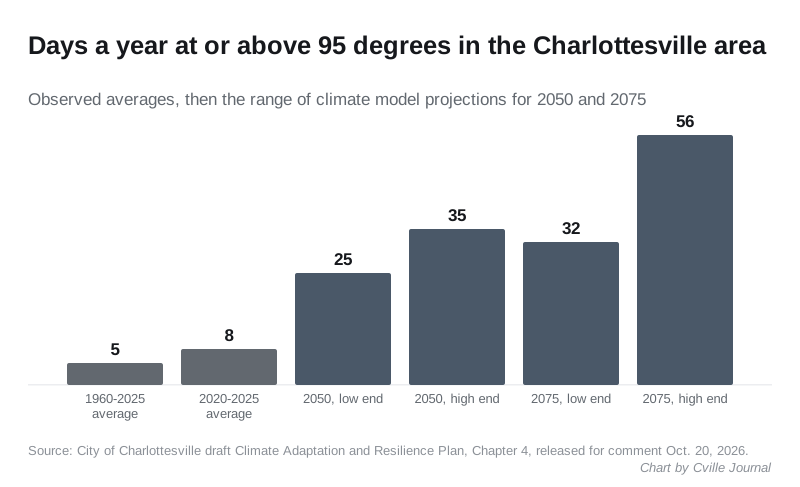
Charlottesville expects 25 to 35 days a year at or above 95 degrees by 2050, up from an average of five. That projection is in the city’s draft Climate Adaptation and Resilience Plan, which is now open for public comment.
The city’s Office of Sustainability released the draft on Tuesday, Oct. 20. Comments are open through the end of November on the city’s Connect Charlottesville site.
The plan is about coping with the effects of a changing climate. The city’s 2023 Climate Action Plan deals separately with cutting greenhouse gas emissions.
What the plan expects
The draft plan (PDF) names six hazards that climate change is making worse for the region:
- severe rain and flooding
- extreme heat
- drought
- wildfire and smoke
- severe winter weather
- disrupted seasons, such as early blooms and late frosts
Heat gets the most detail. From 1960 to 2025, the Charlottesville area averaged five days a year at or above 95 degrees, the plan says. From 2020 through 2025 that average was already eight. The plan projects 25 to 35 such days a year by 2050 and 32 to 56 by 2075, depending on how fast emissions fall.
The 16 strategies
The draft lists 16 strategies, each with its own set of projects. Every project is marked as already started or due to start in one to three, three to five or five to 10 years. They cover:
- biodiversity
- buildings
- communications and information
- community training and partnerships
- economic resilience
- electric energy infrastructure
- emergency response capacity
- food system
- resilience hubs
- state support for local resilience
- stream corridors and floodplains
- transportation
- urban heat islands
- urban stormwater
- water supply and conservation
- wildfire and smoke preparedness
What it could look like on your street
A few of the projects in the draft would be visible to residents:
- Shade and water. Shade structures and green infrastructure along main walking routes, at bus stops and in parks, plus working drinking fountains and refill stations at parks, trailheads and community centers.
- Cooling centers. A set procedure for opening cooling and warming centers, including how to get vulnerable residents there.
- Resilience hubs. A survey of community centers and gathering places that could become neighborhood “resilience hubs,” with backup power and supplies during an outage or storm. The plan puts the investment itself five to 10 years out.
- Trees. An updated street tree guide that requires species suited to the area’s future climate.
The plan came out of Resilient Together, a joint project with Albemarle County and the University of Virginia. Each produced its own plan.
What it means for you
- Have your say by the end of November. Read the plan and leave comments on Connect Charlottesville. Following the project page there gets you notice of chances to talk with city staff.
- Help with heat is available now. The plan points to the Jefferson Area Board for Aging’s Senior Cool Care program, which provides free fans and air conditioning units to people 60 and older who do not qualify through the Department of Social Services. Call the Senior Helpline at 434-817-5244.
- Questions go to the city’s climate program at 434-970-3506.
For storm preparation and what to do when the lights go out, see our guide to power outages in Charlottesville.
Have your say